


To: The Board From: The Revenue Architect Re: Week 1 Diagnostic / The “Corpse” Problem
Last week, we agreed on the diagnostic: Your AI is training on dead data: you are marketing to “ghosts”, this inflates CAC. It makes LTV a fiction.
Today, we fix it, we do not just “clean data”: we install the operating system for revenue efficiency.
This is the Identity Resolution Protocol.
The Math: One Customer. Twelve Costs.
Your customer is not static. In 2026, one high-value user interacts with you everywhere: Laptop, App, Instagram, Physical Store.
In your raw data, this one person appears as 12 ghosts:
Ghost 1: Anonymous browser cookie (User X).
Ghost 2: “Guest checkout” email (User Y).
Ghost 3: Loyalty ID from 2021 (User Z).
Ghosts 4-12: Mobile Device IDs, Work Emails, Connected TV IPs, Expired Cookies, and Facebook Click IDs.
The Financial Leak: You pay to acquire User X. You pay again to retarget User Y. You pay a third time to email User Z.
You pay three times to acquire the same person.
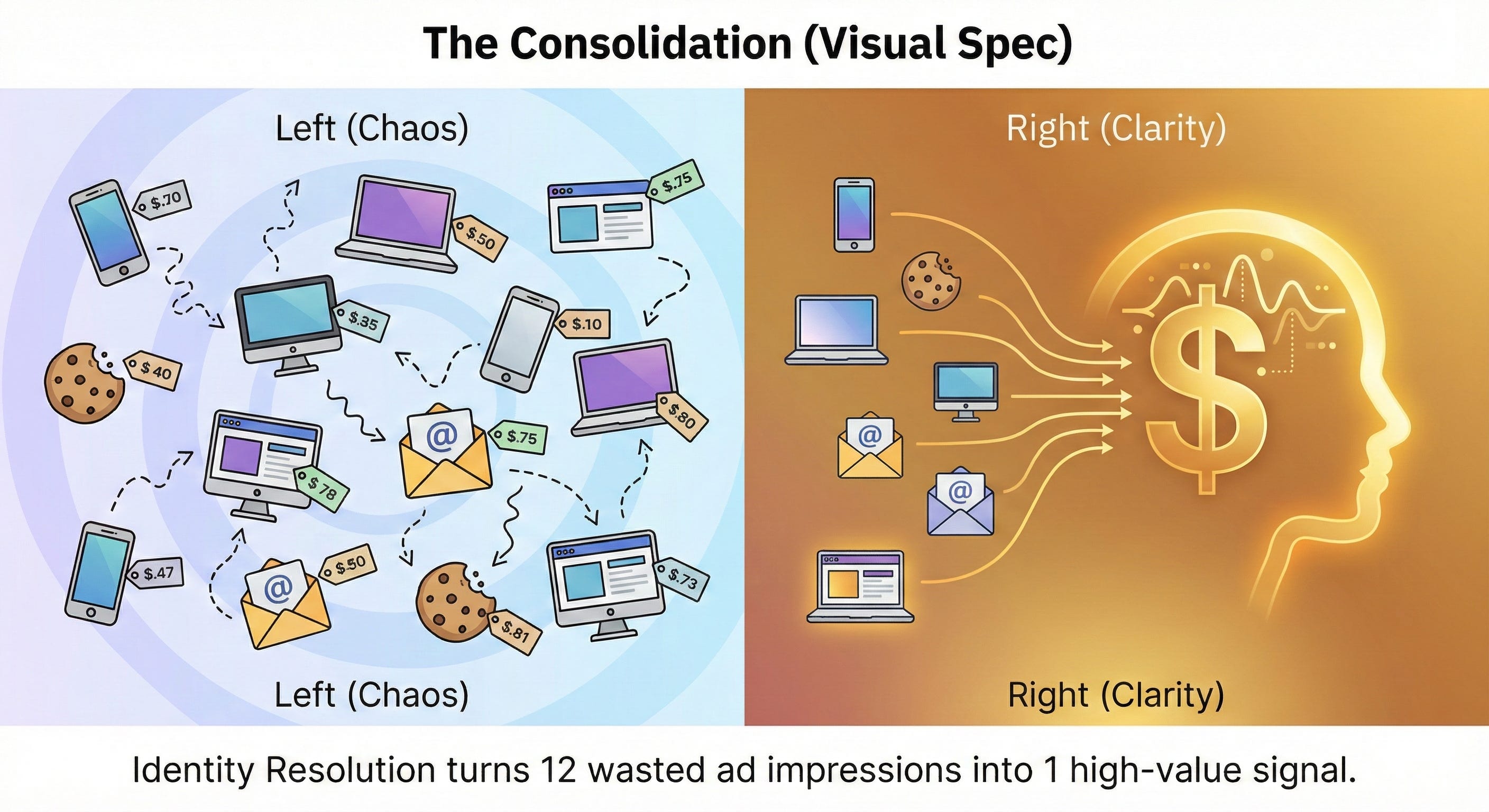
Identity Resolution stitches these 12 ghosts into one Golden Record, it stops the waste: tt creates the signal your AI needs to predict the future.
The Strategy: Kill the “Black Box”
Historically, you solved this by buying a “Black Box” CDP (Customer Data Platform). You sent data to a vendor, they crunched it, they sold it back to you.
This model is obsolete.
Risk: You send PII outside your walls.
Cost: You pay “double rent” (Storage in your cloud + Storage in their cloud).
Blindness: You do not know why profiles were merged.
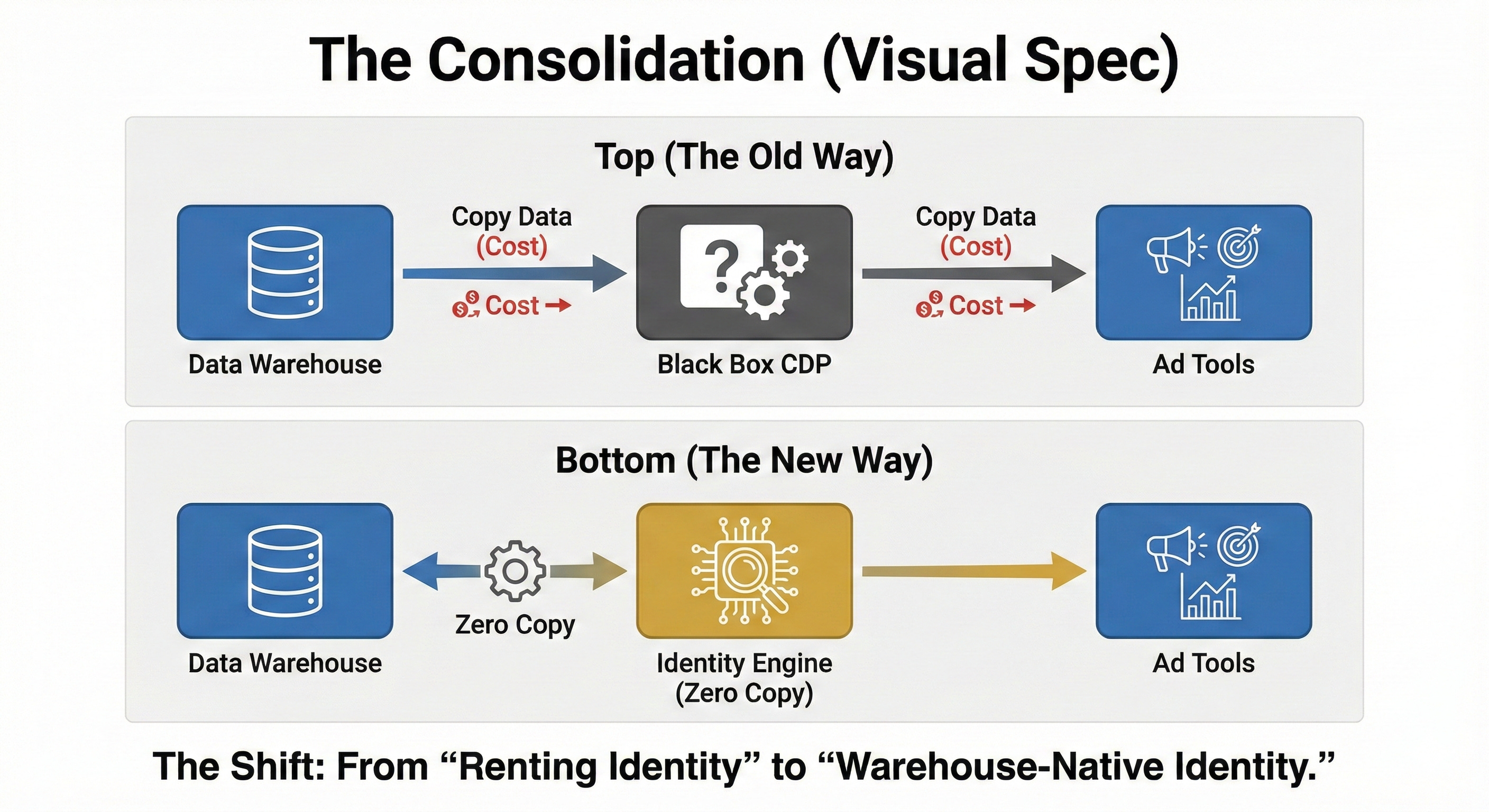
The New Standard: Warehouse-Native (Zero-Copy) Do not move data to the tool. The tool comes to your data. Modern identity engines run directly on your infrastructure.
Security: Data never leaves your governance.
Speed: Real-time resolution.
Cost: Zero-copy. You pay for logic, not storage.
The Decision: Choose Your Risk Profile
Do not ask “Which tool is best?” Ask: “What is our strategic trade-off?” There are only 4 architectures valid for 2026. Pick one.
The Execution: Direct Orders
Once you choose a strategy, issue the corresponding command to your Data Team:
If Speed: “Contract a Composable CDP (e.g., Hightouch, Bytek Prediction Platform). Connect it to your data (Showflake, BigQuery, AWS). Give Marketing the keys to sync audiences directly to Meta/TikTok.”
If Automated: “Contract an AI Identity Vendor (e.g., Amperity). Ingest all raw legacy tables. Let their model build the graph. Do not build this internally.”
If Control: “Build a Private Graph using AWS Entity Resolution. Ensure PII never leaves our VPC. Marketing must request audiences via ticket.”
If Google: “Centralize everything in BigQuery. Use Google’s native ID resolution. Push segments directly to Ads Data Hub.”
The Technical Checklist
Hand this to your Head of Data. Require a “Pass/Fail” response by EOD.
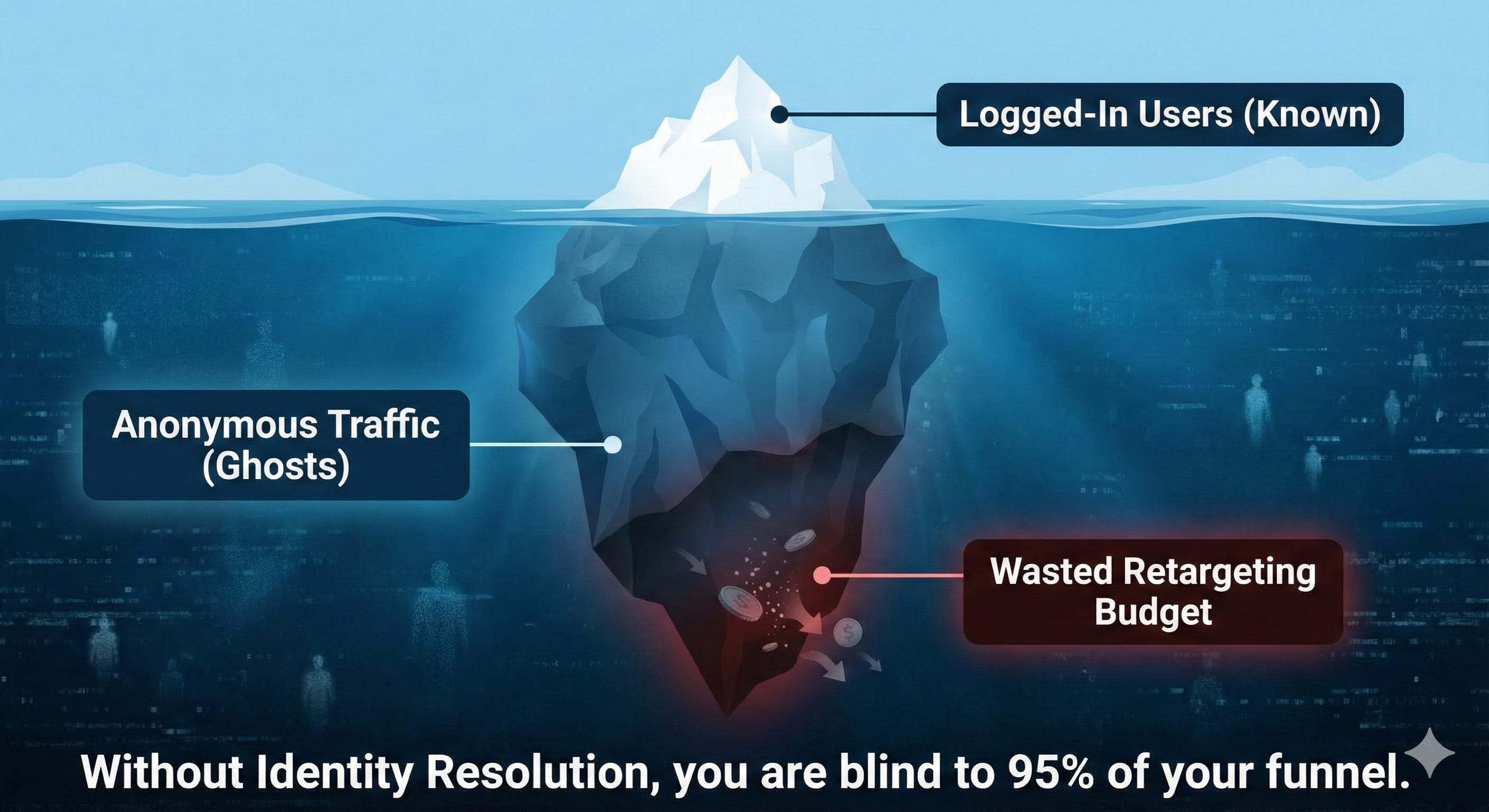
[ ] Test 1: The “Logged-In” Wall
The Question: “Do we identify site visitors before they log in?”
The Wrong Answer: “No, we track cookies but only know who they are after login.”
The Cost: You are ignoring 95% of your funnel. You are bidding on strangers.
[ ] Test 2: The “Double Rent” Audit
The Question: “Do we pay a CDP vendor to store data that already exists in our Warehouse?”
The Wrong Answer: “Yes, the marketing cloud needs its own copy of the data.”
The Cost: You are paying double for storage and creating security risks. Move to Warehouse-Native immediately.
[ ] Test 3: The “Ghost” Ratio
The Question: “What is the ratio of ‘User IDs’ to ‘Billing Profiles’ in our database?”
The Wrong Answer: “About 5 to 1.” (or higher)
The Cost: You are treating one loyal customer as five strangers. Your LTV model is a hallucination.
Summary
Identity Resolution is not an IT ticket. It is the difference between an AI that predicts revenue, and an AI that hallucinates.
Fix the layer. Unify the ghosts. Stop the bleeding.
Next Week: We validate this with the one person who cares most about the money: The CFO. We break down the McKinsey Report—it confirms 90% of marketing budgets are flying blind.
What I found interesting last week
Dinners are the new trade shows. Here’s how to run them well by Emily Kramer
How to do AI analysis you can actually trust by Lenny Rachitsky


